AI generates code. Humans create products.
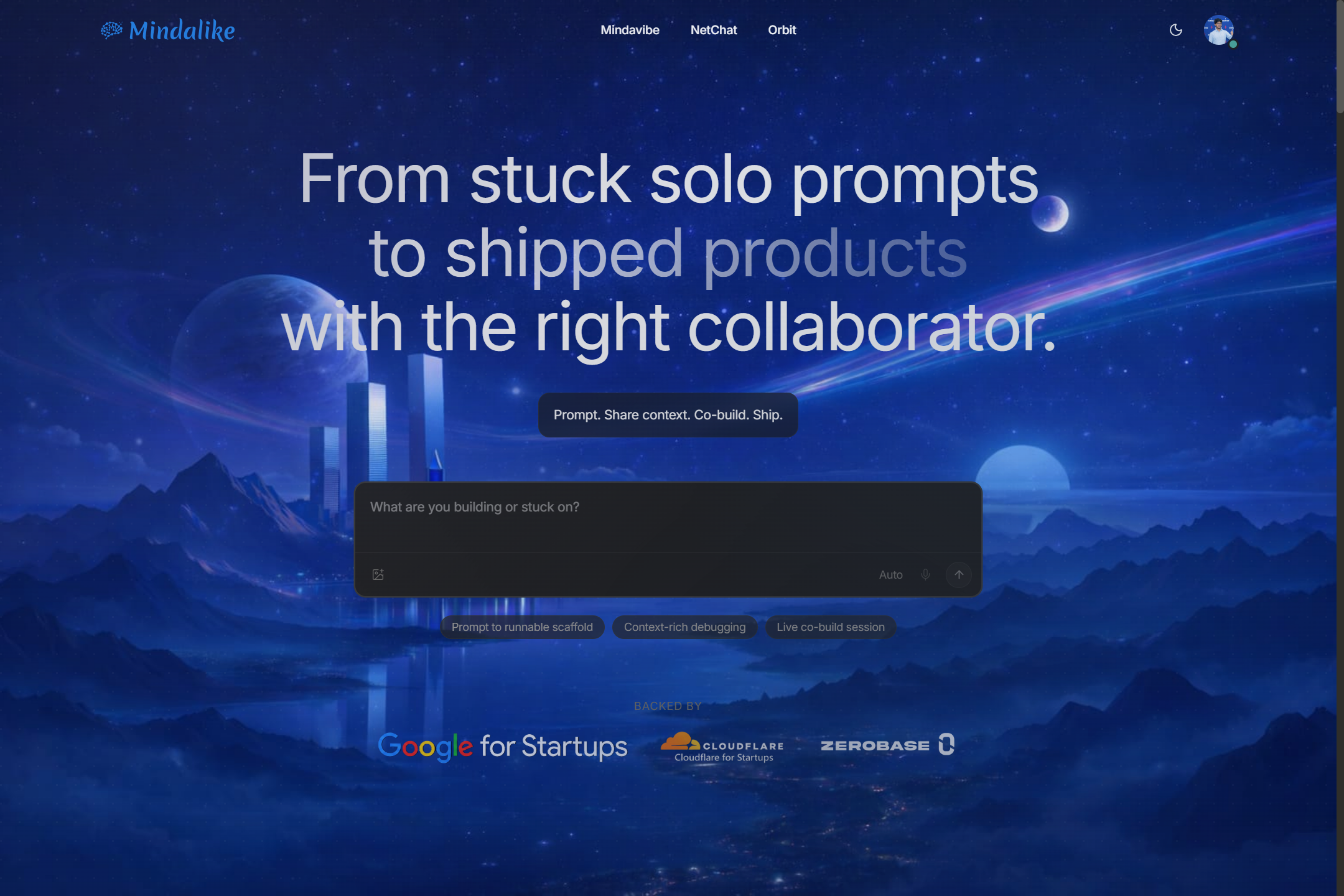
Mindalike makes it possible to do both — together.
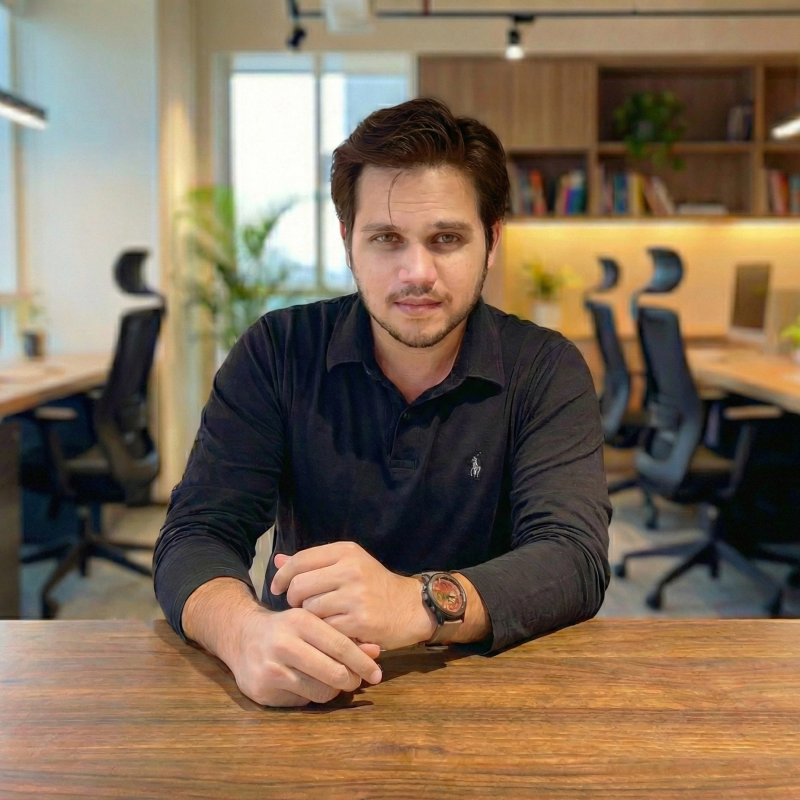
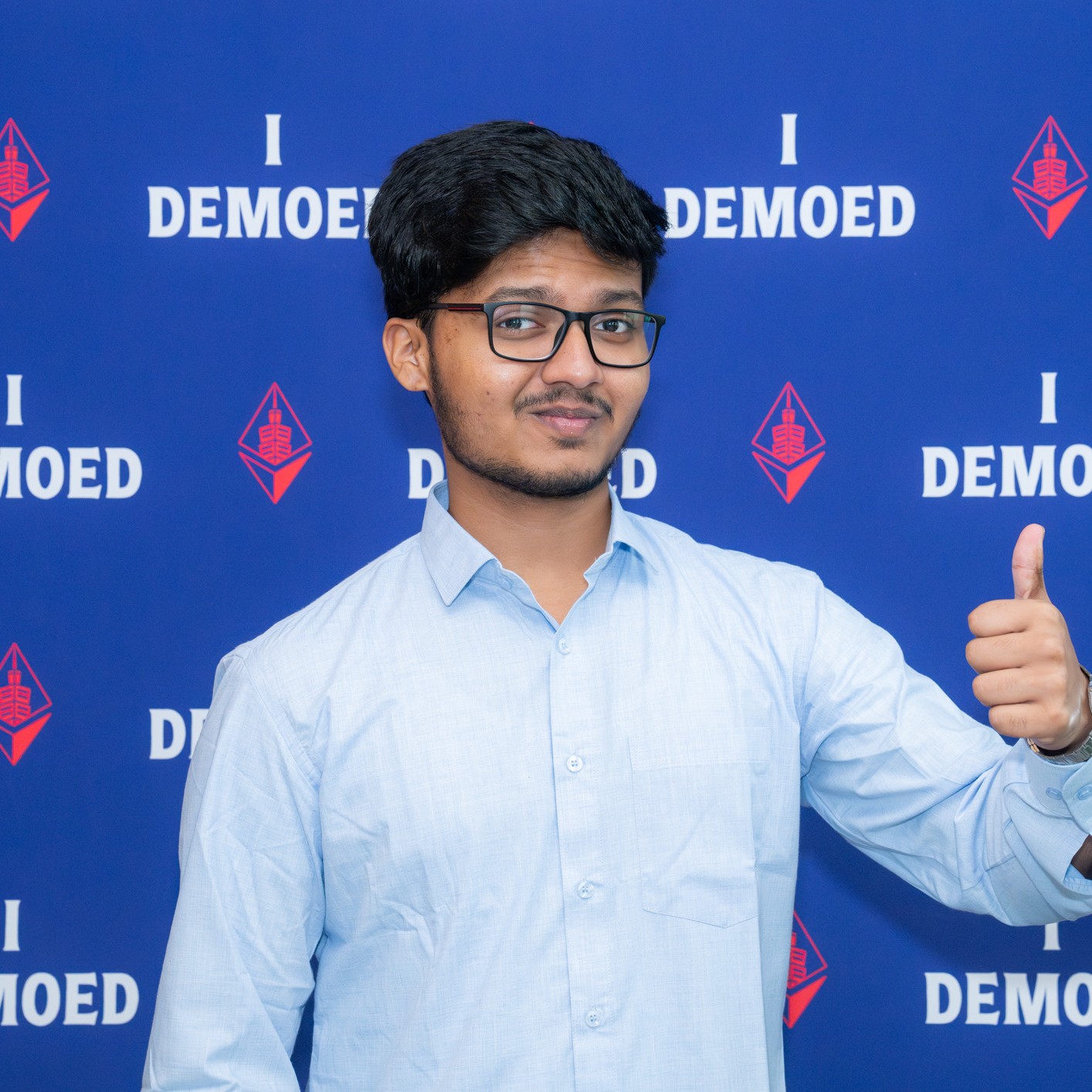
Mohd Murtuza Ali CEO · Mirza Anwaarullah Baig CTO
www.mind-alike.comMillions of builders can now generate code with AI — but the workflow infrastructure for teams building together with AI simply does not exist yet. That is the gap we are filling.
Builders generate code → hit hallucinations → lose architecture → restart from scratch. This cycle repeats because AI has no persistent memory and no ability to coordinate recovery. Hours are lost. Progress stalls.
Every major AI tool — Cursor, Lovable, Replit — is optimized for single-player use. Modern product creation is collaborative. The infrastructure for teams to build together with AI does not exist.
Founders can generate prototypes quickly. But they cannot reliably judge architecture, handle deployment, debug production failures, or assess security. They need human judgment inside the workflow — not outside it.
GitHub, VS Code Live Share, Slack — none were designed around AI agents, shared prompting, or persistent AI memory. They are retrofit solutions for a fundamentally different era of building.
The missing layer in AI software creation is human collaboration infrastructure — the platform that sits between people building with AI. That is the category we are building.
Founder creates an AI-generated prototype inside Mindavibe. Every prompt and scaffold is visible to all collaborators in real time.
Team enters the shared AI-native workspace. Context is persistent. No one starts from scratch. Everyone builds on the same foundation.
AI workflow fails — hallucinations, architecture blockers. A scoped expert joins the live session instantly, no full repo exposure needed.
Bottlenecks resolved. Context intact. Product launched faster than any single team member could have done alone.
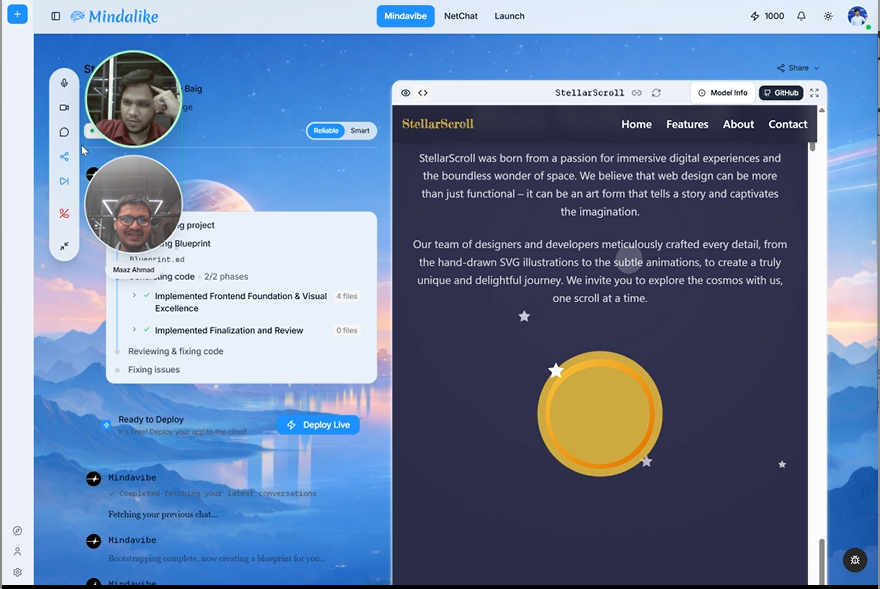
Main multiplayer coding environment with shared context, active collaboration, and the build surface where the product actually happens.
Multiplayer AI-native coding environment. Shared prompts, synchronized context, live cursors, integrated video bubbles. Built for teams, not individuals.
Project memory, prompt history, and architectural decisions stored permanently across sessions and collaborators. AI loses context. Mindalike does not.
Instant expert access inside active workflows. Scoped, time-limited, and embedded — not a marketplace post. Not a Slack message. Inside the build.
Permission-controlled access modes — prompt-only, branch-specific, time-limited, sandbox — so teams collaborate safely without full repo exposure.
Intelligent matching of founders, engineers, designers, and specialists — based on active project context, skill gaps, and failure modes, not static profiles. Every Svatlana who joins creates demand for an Adnan. The network compounds.
Millions of builders can prototype products in hours. The generation barrier is gone. The coordination barrier remains — and is growing.
Individual AI tools are commoditizing. Competitive advantage now lives in how well teams coordinate around AI-generated work — not how fast any one person can prompt.
GitHub, Slack, and VS Code were designed before AI agents entered the workflow. They are foundational tools. They are not AI-native collaboration infrastructure.
"Mindalike is building the collaboration operating system for the AI-native era. The window for this is open. It will not stay open."
We optimize for depth of engagement, not breadth of signups. The right early users generate the data, the word-of-mouth, and the retention curves that matter to investors.
Investor signal: organic growth · network effects · low CAC
North Star Metric
Weekly Collaborative Sessions — volume and week-over-week growth rate
Optional paid specialist access inside live sessions. Platform fee on each collaboration. This is not a freelancer marketplace — it is an in-workflow, real-time human escalation system.
The platform is primary. The escalation economy is secondary. It activates only once the collaboration network has sufficient density to make expert matching fast and reliable at scale.
Project memory, architectural decisions, and prompt history compound over time. The longer a team uses Mindalike, the harder it becomes to leave — their entire build history lives here. Switching costs grow with every session.
More builders generate more collaboration data, which improves matching, which attracts more builders. The network compounds. No competitor can replicate this without first building the network.
Mindalike is embedded in the creation workflow itself — not alongside it. Teams don't use Mindalike as a tool. They build inside Mindalike. That is a fundamentally different switching cost.
Every session generates proprietary signals: who builds well together, what failure modes map to what expertise, what project types succeed. No competitor can buy or replicate this data — it requires the network to exist first.
Multiplayer Mindavibe IDE. Shared prompting. Persistent context. Real-time co-building. Live user feedback from Zerobase S4. Obsessive metric instrumentation begins here.
Full context retention layer. Session replay. Cross-project memory. Collaboration history. Infrastructure runway funding secured.
Scoped expert access inside live sessions. Escalation routing. General Availability public launch. Viral invite loops activated.
Full matching graph. Reputation scoring. Trust infrastructure. Builder marketplace of intent — not labor. Enterprise and startup team pricing begins.
The default operating system for AI-native product creation. Every AI-native startup team runs on Mindalike.
Roadmap board showing phases and completion status for execution proof.
The companies that define this decade will be the ones that owned the workflow between people and AI systems — not just the AI systems themselves. Slack won team communication. Figma won team design. GitHub won team version control. Mindalike wins team AI creation.
We are raising pre-seed capital to prove engagement velocity, build the collaboration network, and become the default layer for AI-native software creation.